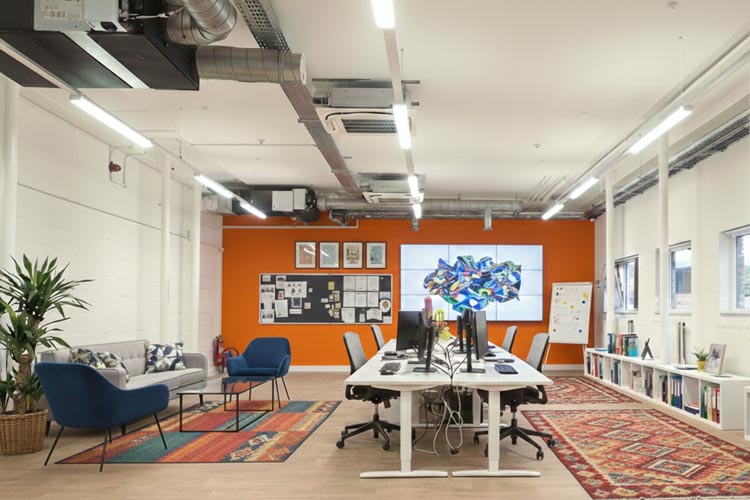
Finding the right small office or studio space isn’t just about finding somewhere you can afford. The right workspace should suit the way you work, be practical for your day-to-day needs and give your business room to grow.
Whether you’re moving out of a home office, setting up your first dedicated studio or looking for a more suitable space for an established business, there are several things worth considering before you sign a rental agreement.
1. Location and accessibility
Think about how easy the workspace is to get to, both for you and for anyone who may need to visit.
Good public transport links can make a big difference, particularly in London, while nearby shops, cafés and other amenities can make your working day more convenient. If you regularly meet clients, suppliers or collaborators, consider how easy the location is for them too.
It’s also worth thinking about access to the building itself. Flexible or extended opening hours can be particularly useful if your working day doesn’t fit the traditional 9-to-5.
2. The true cost of renting
Don’t just look at the advertised rent. Find out exactly what is included and what you’ll need to pay separately.
Heating, electricity, broadband, water, insurance, cleaning, waste disposal and business rates can all add to the cost of a workspace. A space with a slightly higher rent could actually be more affordable overall if more of these costs are included.
For small businesses and start-ups, knowing your total monthly costs makes it much easier to budget.
3. Does the space work for your business?
A small office or studio still needs to give you enough room to work comfortably.
Think about what you actually need from the space. Do you need room for desks and computers, or will you need space for equipment, stock, materials or specialist tools? Will you need to meet clients? Do you need somewhere to display your work or leave projects set up between visits?
Natural light, ventilation, layout and storage can all have a surprisingly big impact on how well a workspace works for you.
4. Privacy and security
Consider how much privacy your business needs.
A shared coworking desk might be perfectly suitable if you mainly need somewhere to work, but a private office or studio can be a better option if you regularly have confidential conversations, meet clients or need to concentrate without distractions.
It’s also worth checking how secure the building and your individual workspace are, particularly if you’ll be storing equipment, stock or valuable materials.
5. Connectivity and facilities
Reliable internet is essential for most businesses, so check what broadband or connectivity is available before committing to a space.
Then look beyond the basics. Are there kitchen facilities, meeting rooms, breakout areas, toilets, cycle storage or somewhere to take a break? Are these shared facilities well maintained and easily accessible?
The right facilities can make a small workspace feel considerably more practical.
6. Flexibility
Your business may look very different in a year’s time, so think about what happens if your circumstances change.
Check the length and terms of the rental agreement, notice periods and whether you can move to a larger or smaller space if your requirements change.
For entrepreneurs, freelancers and creatives, having the flexibility to adapt your workspace as your business develops can be just as important as the space itself.
7. The wider workspace community
Having your own private office or studio doesn’t mean you have to work in isolation.
Some affordable workspace developments provide communal areas where businesses can meet, collaborate and share ideas while retaining their own dedicated space.
For freelancers and small businesses, being around other entrepreneurs and creatives can provide opportunities to make connections, collaborate on projects or simply have a conversation with someone who understands running a small business.
How Affordable Workspace Partnership approaches workspace
At Affordable Workspace Partnership, we don’t simply find existing offices and rent them out. We work with asset owners to identify suitable properties and create workspace around the needs of entrepreneurs, creatives and small businesses.
That means considering everything from location and affordability to the size, layout, facilities and flexibility of the finished spaces.
Our aim is to create practical, high-quality studios and offices that businesses can actually afford, while providing the facilities and flexibility they need to establish themselves and grow.
If you’re considering renting a small office or studio, taking the time to think about how you actually work – and what you may need in the future – can help you find a space that works for your business rather than simply somewhere to put a desk.